1920 en science
| 1917 1918 1919 1920 1921 1922 1923 Décennies : 1890 1900 1910 1920 1930 1940 1950 Siècles : XVIIIe XIXe XXe XXIe XXIIe Millénaires : -Ier Ier IIe IIIe |
Afrique
Afrique du Sud, Algérie, Angola, Bénin, Botswana, Burkina Faso, Burundi, Cameroun, Cap-Vert, République centrafricaine, Comores, République du Congo, République démocratique du Congo, Côte d'Ivoire, Djibouti, Égypte, Érythrée, Éthiopie, Gabon, Gambie, Ghana, Guinée, Guinée-Bissau, Guinée équatoriale, Kenya, Lesotho, Liberia, Libye, Madagascar, Malawi, Mali, Mauritanie, Maurice, Maroc, Mozambique, Namibie, Niger, Nigeria, Ouganda, Rwanda, Sahara occidental, Sao Tomé-et-Principe, Sénégal, Seychelles, Sierra Leone, Somalie, Soudan, Soudan du Sud, Swaziland, Tanzanie, Tchad, Togo, Tunisie, Zambie et Zimbabwe Amérique
Antigua-et-Barbuda, Argentine, Bahamas, Barbade, Belize, Bolivie, Brésil, Canada (Alberta, Colombie-Britannique, Manitoba, Nouvelle-Écosse, Nouveau-Brunswick, Ontario, Québec, Saskatchewan, Territoires du Nord-Ouest et Yukon), Chili (), Colombie, Costa Rica, Cuba, République dominicaine, Dominique, Équateur, États-Unis (), Grenade, Guatemala, Guyana, Haïti, Honduras, Jamaïque, Mexique, Nicaragua, Panama, Paraguay, Pérou, Saint-Christophe-et-Niévès, Saint-Vincent-et-les-Grenadines, Sainte-Lucie, Salvador, Suriname, Trinité-et-Tobago, Uruguay et Venezuela Asie
Abkhazie, Afghanistan, Arabie saoudite, Arménie, Azerbaïdjan, Bahreïn, Bangladesh, Bhoutan, Birmanie, Brunei, Cambodge, Caucase, Chine, Chypre, Corée du Nord, Corée du Sud, Émirats arabes unis, Géorgie, Inde, Indonésie, Irak, Iran, Israël, Japon, Jordanie, Kazakhstan, Kirghizistan, Kurdistan, Koweït, Laos, Liban, Malaisie, Maldives, Mongolie, Népal, Oman, Ossétie du Sud-Alanie, Ouzbékistan, Pakistan, Palestine (), Philippines, Proche-Orient, Qatar, Russie (), Singapour, Sri Lanka, Syrie, Tadjikistan, Taïwan, Thaïlande, Timor oriental, Turkménistan, Turquie, Viêt Nam et Yémen Europe
Abkhazie, Allemagne, Albanie, Andorre, Arménie, Autriche, Azerbaïdjan, Belgique, Biélorussie, Bosnie-Herzégovine, Bulgarie, Caucase, Chypre, Croatie, Danemark (), Espagne, Estonie, Finlande, France (Bretagne, Lorraine et ), Géorgie, Grèce, Hongrie, Irlande, Islande, Italie, Kazakhstan, Kosovo, Lettonie, Liechtenstein, Lituanie, Luxembourg, Macédoine du Nord, Malte, Moldavie, Monaco, Monténégro, Norvège, Ossétie du Sud-Alanie, Pays-Bas, Pologne, Portugal, Roumanie, Royaume-Uni (), Russie (), Saint-Marin, Serbie, Slovaquie, Slovénie, Suède, Suisse, Tchéquie, Turquie, Ukraine et Vatican Océanie
Australie, Îles Cook, États fédérés de Micronésie, Fidji, Indonésie, Îles Marshall, Nauru, Niue, Nouvelle-Zélande, Palaos, Papouasie-Nouvelle-Guinée, Kiribati, Îles Salomon, Samoa, Samoa américaines, Timor oriental, Tonga, Tuvalu et Vanuatu Mers et océans
Manche, Mer Baltique, Mer des Caraïbes, Mer Caspienne, Mer Méditerranée, Mer du Nord, Mer Noire, Mer Rouge, Océan Arctique, Océan Atlantique, Océan Austral, Océan Indien et Océan Pacifique |
Art
Architecture, Arts plastiques (Dessin, Gravure, Lithographie, Peinture et Sculpture), Bande dessinée, Cinéma (Liste des films soviétiques sortis), Dadaïsme et surréalisme, Danse, Échecs, Genres (Fantasy et Science-fiction), (), Littérature (), Musique (Populaire et Classique), Photographie, Radio et Théâtre Ingénierie
Aéronautique (), Architecture, Chemins de fer (Accidents ferroviaires en France), () et Parcs de loisirs Archéologie, Astronomie (), Biologie, Chimie, Climatologie, Économie (discipline), Exploration, Géologie, Histoire, Linguistique, Mathématiques, Numismatique, Paléontologie, Physique, Psychologie, Santé et médecine et Sociologie Athlétisme, Aviron, Baseball, Boxe anglaise, Basket-ball, Catch, Combiné nordique, Cyclisme, Escrime, Football (Américain), Golf, Gymnastique, Haltérophilie, Handball, Hockey (Sur gazon et Sur glace), Lutte, Natation, Patinage (Artistique), Rugby (À XIII et À XV), Ski, Sport automobile, Sports équestres, Sport hippique, Sports pluridisciplinaires (Décathlon et Pentathlon moderne), Tennis (), Tir (À l'arc et Sportif), Voile, () et Water-polo
|
| Années de la science : 1917 - 1918 - 1919 - 1920 - 1921 - 1922 - 1923 | |
| Décennies de la science : 1890 - 1900 - 1910 - 1920 - 1930 - 1940 - 1950 |
Cet article présente les faits marquants de l'année 1920 en science.
Événements
- 26 avril : création en Roumanie de l'Institut de spéléologie de l'université de Cluj, le premier au monde, dirigé par Emil Racoviță[1].
- 16 octobre : dans le Lot, le propriétaire des lieux, M. Lamothe et sa fille Marguerite, découvrent la grotte des Merveilles, une grotte ornée paléolithique[2].
- Le neurologue allemand Hans Gerhard Creutzfeldt décrit les symptômes d'une curieuse affection neurologique[3].
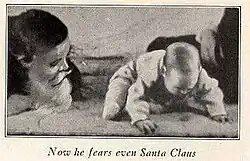
- Le psychologue américain John Broadus Watson reprend les travaux de Pavlov sur le conditionnement avec son assistante Rosalie Rayner (en), en conduisant l'« expérience du petit Albert », qui donne lieu à une théorie sur l'apparition des phobies[4].
- L'archéologue indien Daya Ram Sahni (en) commence les fouilles du site de Harappa (1920-1925)[5].
Sciences physiques
- 26 avril : ouverture d'un grand débat public au Musée national d'histoire naturelle des États-Unis entre les astronomes américains Harlow Shapley et Heber Curtis sur la nature des « nébuleuses » et la taille de l'univers. Il est clos en 1924 par Edwin Hubble qui prouve la nature extragalactique de ces objets[6].
- 3 juin : le physicien néo-zélandais Ernest Rutherford prédit l'existence du neutron au cours de sa seconde lecture bakerienne à Londres[7].
- 31 octobre : l'astronome Walter Baade découvre l'astéroïde (944) Hidalgo[8].
- 13 décembre : première mesure du diamètre d'une étoile géante rouge, Bételgeuse, grâce à l'interféromètre de Michelson du télescope de l'Observatoire du Mont Wilson[9].
- Découverte de la météorite d'Hoba près de Grootfontein, en Namibie. C'est la plus grande météorite connue (60 tonnes en un seul morceau)[10].
- L'astrophysicien indien Megh Nad Saha formule l'équation d'ionisation des gaz stellaires[11].
- Arthur Eddington publie ses observations sur la courbure gravitationnelle des rayons lumineux, effectuées à l'occasion de l’éclipse solaire du 29 mai 1919, qu'il considère comme une confirmation de la théorie de la relativité générale d'Einstein[12].
- L'ingénieur Alan A. Griffith publie son analyse du phénomène de rupture fragile[13].
Prix
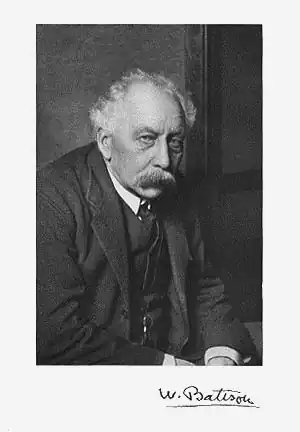
- Prix Nobel
- Physique : Charles Edouard Guillaume (Suisse, alliage des métaux).
- Chimie : Hermann Walther Nernst (Allemand, thermochimie)
- Physiologie ou médecine : Schack August Steenberg Krogh (Danois)
- Médailles de la Geological Society of London
- Médaille Lyell : Edward Greenly (en)
- Médaille Murchison : Ethel Mary Reader Shakespear (en)
- Médaille Wollaston : Gerard Jakob de Geer
- Prix Jules-Janssen (astronomie) : Henri-Alexandre Deslandres
- Médaille Bruce (Astronomie) : Ernest William Brown
- Médaille Linnéenne : Sir Edwin Ray Lankester
- Prix Poncelet : Élie Cartan
- Colloquium Lectures (AMS) : George David Birkhoff
- Médaille De Morgan : E. W. Hobson
- Médaille Guy d'or : T.H.C. Stevenson
- Prix Alfred Ackermann-Teubner : Gustav Mie
- Cours Peccot 1919-1920 : Léon Brillouin ; 1920-1921 : Maurice Janet
Naissances
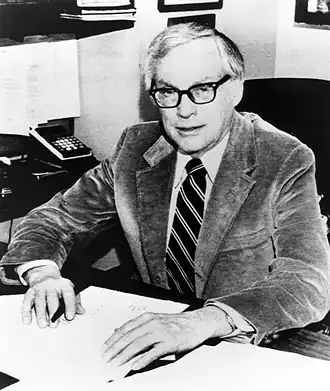
- 2 janvier : George Herbig (mort en 2013), astronome américain.
- 4 janvier : Yves Gentilhomme (mort en 2016), linguiste et mathématicien français.
- 6 janvier : John Maynard Smith (mort en 2004), biologiste de l'évolution et généticien britannique.
- 13 janvier : Elwood Jensen (mort en 2012), biologiste moléculaire américain.
- 22 janvier : Richard J. C. Atkinson (mort en 1994), préhistorien et archéologue britannique.
- 28 janvier : Donald deAvila Jackson (mort en 1968), psychiatre américain, pionnier de la thérapie familiale.
- 2 février : Raymond Daudel (mort en 2006), chimiste théorique français.
- 8 février : Robert Bemer (mort en 2004), ingénieur en aéronautique et informaticien américain.
- 11 février : Fred Basolo (mort en 2007), chercheur américain.
- 18 février : Cornelis Johannes van Houten (mort en 2002), astronome néerlandais.
- 19 février : Jürgen von Beckerath (mort en 2016), égyptologue allemand.
- 29 février : Román Piña Chán (mort en 2001), archéologue et anthropologue mexicain.
- 11 mars : Nicolaas Bloembergen (mort en 2017), physicien néerlandais naturalisé américain, prix Nobel de physique en 1981.
- 15 mars : Donnall Thomas (mort en 2012), médecin américain, prix Nobel de physiologie ou médecine en 1990.
- 22 mars : Charles Stein (mort en 2016), statisticien américain.
- 30 mars : Daniel Koshland (mort en 2007), biochimiste américain et éditeur de Science.
- 6 avril : Edmond Fischer (mort en 2021), biologiste suisse naturalisé américain, prix Nobel de physiologie ou médecine en 1992.
- 12 avril : Germain Brisson (mort en 2014), agronome et professeur québécois.
- 13 avril : Jacques-Émile Dubois (mort en 2005), chimiste français.
- 8 mai :
- Gyula Strommer (mort en 1995), mathématicien et astronome hongrois.
- Jean-Dominique Warnier (mort en 1990), informaticien français.
- 28 mai : Victor Turner (mort en 1983), anthropologue britannique.
- 13 juin : Rolf Huisgen (mort en 2020), chimiste allemand.
- 16 juin : Raymond Lemieux (mort en 2000), chimiste canadien.
- 17 juin : François Jacob, biologiste français, prix Nobel de physiologie ou médecine en 1965.
- 10 juillet : Owen Chamberlain (mort en 2006), physicien américain, prix Nobel de physique en 1959.
- 18 juillet : Henry Gordon Rice (mort en 2003), logicien et mathématicien américain.
- 20 juillet : Francisco González Rul (mort en 2005), archéologue mexicain.
- 22 juillet : Florestan Fernandes (mort en 1995), sociologue et homme politique brésilien.
- 25 juillet : Rosalind Elsie Franklin (morte en 1958), cristallographe britannique.
- 22 août : Philip Arthur Barker (mort en 2001), archéologue britannique.
- 26 août : Alberte Pullman, chimiste théoricienne française.
- 28 août : Paul Germain (mort en 2009), scientifique et universitaire français.
- 3 septembre : Robin Plackett (mort en 2009), statisticien britannique.
- 10 septembre : Calyampudi Radhakrishna Rao (mort en 2023), statisticien indien.
- 16 septembre : Evry Schatzman (mort en 2010), astrophysicien français.
- 29 septembre : Peter Mitchell (mort en 1992), chimiste anglais, prix Nobel de chimie en 1978.
- 2 octobre : Giuseppe Colombo (mort en 1984), mathématicien, astronome, ingénieur italien.
- 3 octobre : Harvey Itano (mort en 2010), biochimiste américain.
- 11 octobre : Jean Montreuil (mort en 2010), biochimiste français.
- 24 octobre : Marcel-Paul Schützenberger (mort en 1996), médecin et mathématicien français.
- 29 octobre : Baruj Benacerraf, médecin et biologiste américain d'origine marocaine, prix Nobel de physiologie ou médecine en 1980.
- 3 décembre : Roland Fraïssé (mort en 2008), mathématicien (logicien) français.
- 6 décembre : George Porter (mort en 2002), chimiste britannique.
- 9 décembre : Camille Sandorfy (mort en 2006), chimiste québécois.
- 17 décembre : Kenneth Iverson (mort en 2004), informaticien canadien.
- 21 décembre :
- Georges Balandier (mort en 2016), ethnologue et sociologue français.
- Adele Goldstine (morte en 1964), mathématicienne et informaticienne américaine.
- 27 décembre : Alain Gheerbrant (mort en 2013), poète et explorateur français.
Décès
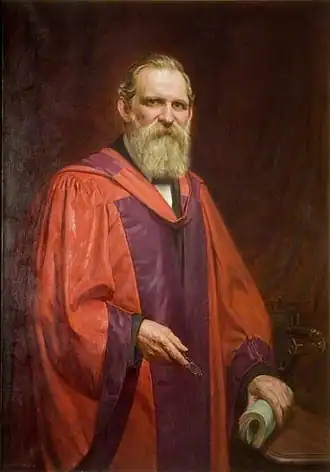
- 18 janvier : Paul Güssfeldt (né en 1840), géologue, alpiniste et explorateur allemand.
- 20 janvier : Walter Edward Gudgeon (né en 1841), ethnologue néo-zélandais.
- 31 janvier : Wilhelm Friedrich Philipp Pfeffer (né en 1845), botaniste allemand.
- 16 février Edward Jones (né en 1856), statisticien américain.
- 20 février : Robert Edwin Peary (né en 1856), explorateur américain.
- 25 février : Marcel Dieulafoy (né en 1844), archéologue français.
- 11 mars : Julio Garavito Armero (né en 1865), astronome et mathématicien colombien.
- 13 mars : Charles Lapworth (né en 1842), géologue britannique.
- 8 avril : John Alfred Brashear (né en 1840), astronome américain et un constructeur d'instruments astronomiques.
- 10 avril : Moritz Cantor (né en 1829), historien des mathématiques allemand.
- 20 juin : Ludwig Gattermann (né en 1860), chimiste allemand.
- 21 juin : Marie-Adolphe Carnot (né en 1839), chimiste, géologue, homme politique et homme d'affaires français.
- 17 juillet : Heinrich Dressel (né en 1845), archéologue et épigraphiste allemand.
- 12 août : Hermann Struve (né en 1854), astronome allemand.
- 16 août : Joseph Norman Lockyer (né en 1836), scientifique, vulgarisateur, et astronome britannique.
- 18 septembre : Frédéric Houssay (né en 1860), zoologiste français.
- 2 novembre : André Dumont (né en 1847), ingénieur et géologue belge.
- 4 novembre : Gustav Wilhelm Ludwig Struve (né en 1858), astronome russe.
- 7 novembre : Félix Pisani (né en 1831), savant, chimiste et minéralogiste français.
- 3 décembre : William de Wiveleslie Abney (né en 1843), astronome, chimiste et photographe britannique.
Notes et références
- ↑ Lumea, Numéros, vol. 1 à 17, (présentation en ligne)
- ↑ « Huit bonnes adresses sous nos pieds », sur La Nouvelle République des Pyrénées,
- ↑ G. E. Berrios, The History of Mental Symptoms: Descriptive Psychopathology Since the Nineteenth Century, Cambridge University Press, (ISBN 9780521437363, présentation en ligne)
- ↑ Raphaele Miljkovitch, Françoise Morange-Majoux, Emmanmuel Sander, Psychologie du développement, Elsevier Health Sciences, (ISBN 9782294755453, présentation en ligne)
- ↑ Ian Shaw, Robert Jameson, A Dictionary of Archaeology, John Wiley & Sons, (ISBN 9780470751961, présentation en ligne)
- ↑ Joseph A. Angelo, Encyclopedia of Space and Astronomy, Infobase Publishing, (ISBN 9781438110189, présentation en ligne)
- ↑ K. Bhushan, G. Katyal, Nuclear, Biological and Chemical Warfare, APH Publishing, (ISBN 9788176483124, présentation en ligne)
- ↑ Curtis Peebles, Asteroids - A History, Smithsonian Institution, (ISBN 9781944466046, présentation en ligne)
- ↑ Albert Abraham Michelson et Francis G. Pease, « Measurement of the diameter of alpha Orionis with the interferometer », The Astrophysical Journal, vol. 53, , p. 249–59 (DOI 10.1086/142603, Bibcode 1921ApJ....53..249M).
- ↑ Matthieu Gounelle, Les Météorites, Presses universitaires de France, (ISBN 9782715413009, présentation en ligne)
- ↑ Gérard Belmont, Laurence Rezeau, Arnaud Zaslavsky, Introduction à la physique des plasmas, ISTE Group, (ISBN 9781784054618, présentation en ligne)
- ↑ F.W. Dyson, Arthur S. Eddington et C.R. Davidson, « A Determination of the Deflection of Light by the Sun's Gravitational Field, from Observations Made at the Solar eclipse of May 29, 1919 », Philosophical Transactions of the Royal Society A: Physical, Mathematical and Engineering Sciences, vol. 220, nos 571-581, , p. 291–333 (DOI 10.1098/rsta.1920.0009, Bibcode 1920RSPTA.220..291D).
- ↑ « The Phenomenon of Rupture and Flow in Solids », Philosophical Transactions of the Royal Society, vol. A221, , p. 163–98 (DOI 10.1098/rsta.1921.0006, JSTOR 91192, Bibcode 1921RSPTA.221..163G).
 Portail de l’histoire des sciences
  Portail des sciences
 .png) Portail de l’entre-deux-guerres
Portail de l’entre-deux-guerres